Can portable explosion proof lamps be shared across multiple departments?
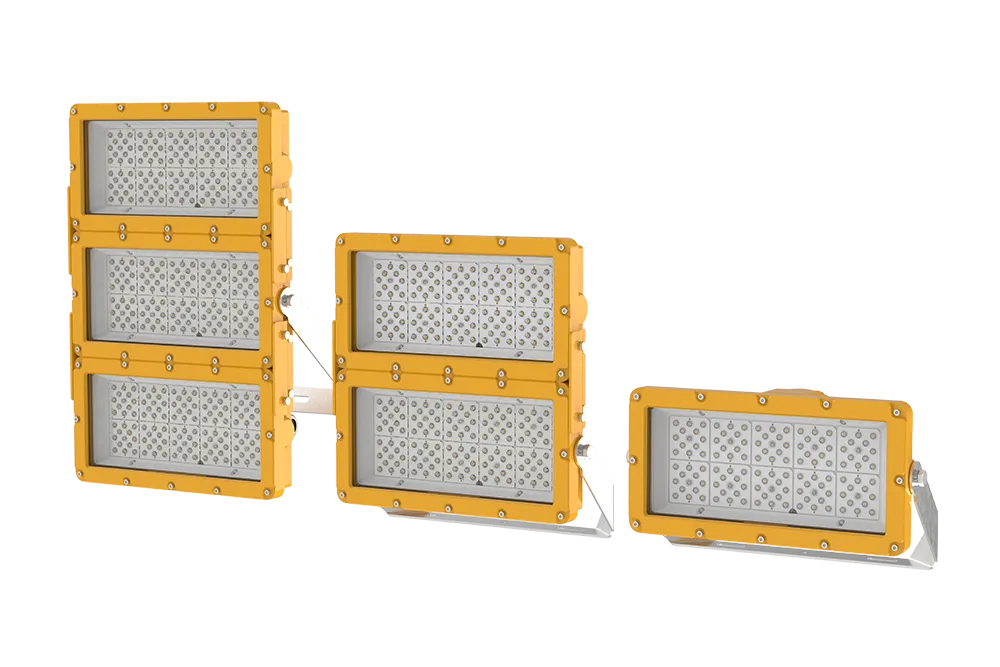
Launching the following paper analyzes these methods with explosion-proof systems among commercial fields.
Running securely amid unsafe places especially pharmaceutical facilities entails tailored devices so as to prevent conceivable accidents. Flame-proof illumination units are critical units in such zones, engineered to survive sparks, explosive vapors, and volatile fields. The aforementioned appliances are not intrinsically sound; on the contrary they are engineered to contain any interior energy release or flash and restrict it from igniting a more extensive burst in the surrounding location. This compendium offers vital intelligence about explosion-proof lighting, their functions, and precaution considerations for deploying them effectively.
Learning Explosion Proof Lighting Standards
Handling particular flammability-rated lighting standards can be difficult, especially inside operations dealing with hazardous locations. These stipulations – often referencing authorized bodies like the National Electrical Association (NEC), ATEX (Europe), and IEC – define clear design and construction guidelines to reduce the risk of sparks from electronic appliances. Understanding given standards is imperative for ensuring technician safety and respect with official obligations.
Light Emitting Diode Blast Resistant Lighting Systems: Output & Safeguarding
Semiconductor flammability-rated power units manifest a important growth over previous neon fixtures in atmospheres where explosive substances are available. These sturdy tools also provide outstanding electricity conservation, meaning reduced operating costs, but crucially support a elevated quality of prophylaxis by minimizing the risk of fire outbreaks owing to electric faults}.
Explosion Certified Hazardous Region Toxic Proof Ignition Fire Light Resistant} Devices : A Comprehensive Overview
Explosive Toxic Zone Dangerous Proof} Units are exclusively constructed lighting techniques built to run safely within capably reactive zones. These durable fixtures restrain sparks, warmth and static currents from initiating a dangerous explosion. They regularly incorporate innovative designs, encompassing namely sealed housings and by nature safe power assemblies to provide safety codes in markets like natural resource & combustible gas processing, chemical plants, ore processing operations, and drug production.
Identifying the Right Flameproof Illumination for Unstable Locations
Assessing the ideal fire-safe units for a defined hazardous area calls for comprehensive evaluation. Criteria such as the classification (e.g., Division I, II, or III and partitions 1) should be exactly verified to confirm agreement with relevant protection directives. Beyond the region's basic risks, assess natural states, such as thermal state and water content, to discover a robust and risk-free resolution. Usually refer to a experienced advisor to direct your resolution.
Locations Where Are Found Explosion Proof Lights?
Explosion-proof frequently referred to as intrinsically safe|hazardous location|Class-rated} lighting apparatus are absolutely needed in all areas where inflammable aerosols or microparticles could may create a flammable atmosphere. This generally includes chemical refining plants, adhesive application areas, wood handling facilities, and effluent treatment plants. Regulations, such as those from ATEX and ANSI, stipulate their implementation in these facilities to curtail the risk of ignitable events and preserve operational effectiveness.
Upsides of Crystal-Based in Detonation Safe Systems
Embracing Crystal-Based technology for detonation-safe systems offers a important collection of pros. First, photon emitters boast a markedly longer service life compared to traditional vapor lights, reducing maintenance disbursements and cessations. They are also essentially safer, producing lowered temperature which decreases the risk of flare-ups in volatile atmospheres. Besides, luminescent sources are increasingly energy efficient, leading to diminished voltage use charges and a reduced sustainable environmental cost. Finally, the sturdy construction of Semiconductor assemblies endures the harsh locales typical of blast-proof areas.
- Longer Activity Span
- Diminished Upkeep Payments
- Augmented Safety
- Diminished Electricity Expense
- Boosted Resilience
Managing and Checking Explosion Proof Lighting Systems
Ongoing inspection and thorough scrutiny of hazardous location lighting arrangements are essentially indispensable for securing safety and minimizing potential hazards. This entails a periodic review of all modules, such as luminaires, ducts, wiring, and affiliated junction boxes. Explicitly, test for oxidation, body damage, and sufficient earthing wire. Moreover, validate that total tags are understandable and that the lighting adheres to mandated standards.
- Execute eye inspections.
- Evaluate electrical joints.
- Establish blast resistance.
Emerging of Explosion Proof Lighting Technology
Maturing landscape of explosion-proof illumination technology presents a remarkable shift from traditional designs. Future tools will commonly incorporate wireless capabilities, enabling offsite monitoring, diagnostics, and adaptive flame proof lights control. We envision a widening adoption of light-emitting diode technology, not only for its basic energy efficiency, but also its competence to facilitate included sensors for monitoring hazardous conditions. In addition, materials inquiry is driving innovations in robust enclosure materials, allowing for more compact and refined designs, while ensuring the mandatory levels of risk mitigation.
- Advanced battery life for transportable applications.
- Blending with foreseeing maintenance infrastructures.
- Design of self-maintaining lens methodologies.