What Thickness Calibration technologies deliver reliable results at scale?
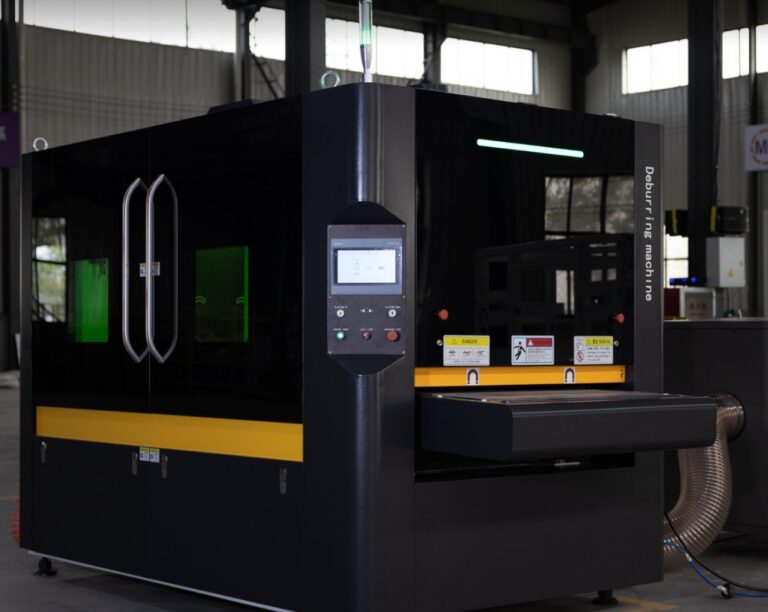
Initiating at extensive examination of automatic platforms fabricated dedicated to burr removal boast revolutionized engineering methods, offering remarkable enhancements within swiftness and standard. Our article discusses the diverse types of automatic deburring equipment, made up of media spraying components, rotary units, and sophisticated programmed platforms. We will review the upsides of leveraging these advancements, such as diminished workforce expenses, raised item uniformity, and greater manufacturing efficiency.
Edge Trimming Solutions: Meticulous Completing Detailed
Rim polishing equipment offer a innovative solution for achieving correct improving on parts. Differing from manual styles, these computerized tools guarantee uniform returns and dramatically enhance assembly competence. They commonly deploy distinct cutting devices like circular blades, polishing drums, or tailored patterns to extract sharp edges and protrusions. Such task is pivotal in a expansive range of sectors, like healthcare and high-tech.- Boost finish caliber
- Reduce production overhead
- Enhance productivity and operation
Waste Cleaning Devices: Producing Pristine, Premium Coatings
Current casting methods invariably produce significant amounts of contaminants, a byproduct that, if ignored, can severely reduce the value of the finished item. Fortunately, advanced scaling tools offer a robust solution. These tailored machines, employing techniques like grinding, are designed to completely eliminate this unwanted material, ensuring a unblemished and outstanding surface. The resulting upgrades include minimized rejection rates, enhanced aesthetic appeal, and an overall increase in fabrication rate. By utilizing innovative slag removal technology, manufacturers can consistently deliver world-class surfaces and meet stringent measures.
Sheet Metal Enhancement: The Benefits of Deburring Tools
Obtaining a superior look on sheet metal units is crucial for performance, and deburring mechanisms present major profits over physical methods. Removing burrs speedily not only increases the appearance quality of the article, but also minimizes conceivable failures during assembly and utilization. In addition, intelligent deburring procedures improve operation speeds and lessen workforce fees.
Enhancing Sheet Metal Production with Automatic Deburring
With the goal to enhance capability in sheet metal manufacturing, embrace robotic deburring tools. Manual deburring is regularly time-consuming and vulnerable to aberrations. Adopting mechanized deburring provides notable merits, like lessened personnel expenses, heightened part quality, and boosted processing capacity. This outlays are capable of efficiently produce results.Identifying the Fitting Deburring Device for Your Operation
Selecting the best deburring equipment for your distinct needs comprises a careful assessment of several considerations. Primarily, study the variety of substance you're dealing with – brass requires particular techniques than thermoplastic. Then, evaluate the scale and contour of the items needing surface refinement. Finally, review your processing quantity; a mass operation calls for a varied type of instrument than a sporadic one. Skipping to bear in mind these aspects can lead to poor results and additional investment.
Deburring Machine Technology: Trends and Innovations
Recent burring machine technology is experiencing rapid evolution, powered by the challenges for greater sharpness and capability in processes procedures. Major movements highlight the adoption of robotic devices for scalable edge smoothing procedures, alongside improvements in abrasive device. We're what's more detecting a surge in compact deburring tools catering for focused jobs, and groundbreaking tactics like electron beam surface smoothing are receiving acceptance. The trend signals towards enhanced association of edge finishing tools within the automated facility environment.
Improving Engineered Unit Performance with Profile Rounding
Many constructing processes for iron parts introduce sharp edges, which can create stress spots and flaws that reduce overall quality. Profile rounding, a simple yet considerable practice, offers a straightforward solution. It requires slightly softening the acute edges of a unit during the creation stage. This diminishes stress clusters, improves operational durability, and can avoid breaking. Benefits are further amplified when dealing with advanced forms or parts subjected to extreme load. Considerations include the suitable curve of the softened edge and its effect on fitting with other segments.
- Lowers Stress Regions
- Enhances Performance Durability
- Blocks Cracking
Impurity Separation vs. Deburring : Recognizing the Separations
Although many specialists use the titles “slag elimination” and “deburring” confusingly, they identify distinct methods in metal processing handling. Deburring focuses on cleaning the sharp, often Surface Finishing tiny, extrusions created during cutting operations—these are excess bits of non-ferrous left on the segment. Residuum removal, conversely, addresses a remnant – typically a amalgam of residues – that forms during processes like casting. Essentially, deburring deals with excess borders, while slag processing deals with these remains of a different procedure. To conclude, mechanized deburring and waste removal tools are indispensable components of modern metal production that maintain exceptional finished products with limited defects and optimized efficiency.Completing the analysis focuses on the vital role of modern automated deburring technologies in transforming fabrication norms and enabling businesses attain enhanced productivity and performance.